

Seizure first aid
If someone is having a seizure
Most seizures stop on their own within a couple of minutes. You do not need medical training to help. Your job is to keep the person safe until it passes.
Call an ambulance immediately if
- The seizure lasts longer than 5 minutes.
- Another seizure follows without the person fully recovering in between.
- The person is injured, has difficulty breathing, or does not wake up afterwards.
- The seizure happens in water.
- The person is pregnant, or has diabetes.
- It is their first ever seizure, or you simply do not know.
During a convulsive seizure
Where the person falls, stiffens and shakes.
-
Note the time
Start timing as soon as you can. The length of the seizure is the single most useful thing you can tell paramedics, and it decides whether you need to call at all.
-
Clear the space around them
Move furniture, hot drinks and anything hard or sharp out of the way. Do not move the person unless they are somewhere genuinely dangerous, such as a road or water.
-
Cushion their head
Put something soft underneath — folded clothing works. Loosen anything tight around the neck, and take off their glasses, if possible.
-
Stay with them and stay calm
Let the seizure run its course. Ask bystanders to step back and give the person privacy — crowding helps nobody and adds to the embarrassment afterwards.
-
Turn them on their side once the shaking stops
The recovery position keeps the airway clear and lets saliva drain. Check that nothing is blocking their nose or mouth.
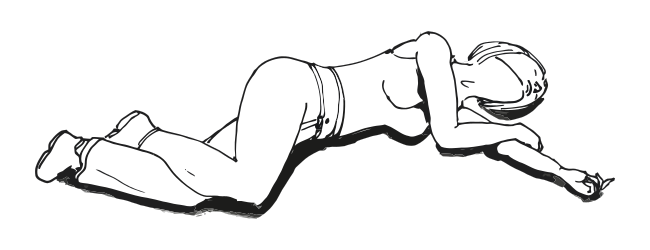
The recovery position: on their side, head supported, mouth pointing slightly down, top knee bent so they cannot roll onto their back and choke. Illustration: Rama, CC BY-SA 3.0 FR. -
Stay until they are fully alert
Confusion, exhaustion and patchy memory are normal and can last a while. Tell them calmly what happened and where they are. Do not leave them alone until they are properly oriented.
Provide information which can be captured in the person’s seizure diary. This helps the medical team to adjust treatment if necessary.

Do and do not
Do
- Time the seizure from the moment it starts.
- Protect their head and clear the area.
- Turn them onto their side afterwards.
- Stay calm, and keep others calm.
- Check for a medical bracelet or card.
- Reassure them as they come round.
Do not
- Put anything in their mouth — ever.
- Try to hold them down or stop the movements.
- Give food, drink or medication.
- Move them unless they are in real danger.
- Crowd around them.
- Leave before they have properly recovered.
The tongue-swallowing myth
It is not possible to swallow your tongue during a seizure. Forcing an object — or a finger — into someone's mouth is one of the most common ways bystanders cause real injury, breaking teeth or getting bitten. Never do it, however alarming the seizure looks.
Seizures that are not convulsive
Many seizures involve no shaking at all. Someone may simply stop and stare, not respond when spoken to, pluck at their clothes, wander, or repeat a small movement such as chewing or swallowing. They are not being rude and they are not daydreaming — they are having a seizure and cannot respond.
In that case:
- Do not grab or restrain them; guide them gently away from hazards such as stairs or traffic.
- Speak quietly and simply. Do not expect answers.
- Stay with them until they are fully aware again, then explain what happened.
Afterwards
Write down what you saw — how long it lasted, what happened first, whether they were confused afterwards. People often remember nothing of their own seizures, so a witness account is genuinely valuable to their doctor.
Show references
- World Health Organization — Epilepsy fact sheet
- Epilepsy South Africa — first-aid guidance (legacy site)
This page awaits review by a clinician authorised by Epilepsy South Africa; until then it is general information drawn from the sources above.
This page is general information and does not replace advice from a doctor. If you are unsure at any point, call an ambulance on 10177.